
Keeping the lights on: How a mix of electricity sources will help us reach net-zero
December 02, 2020
renewable energy
renewable energy
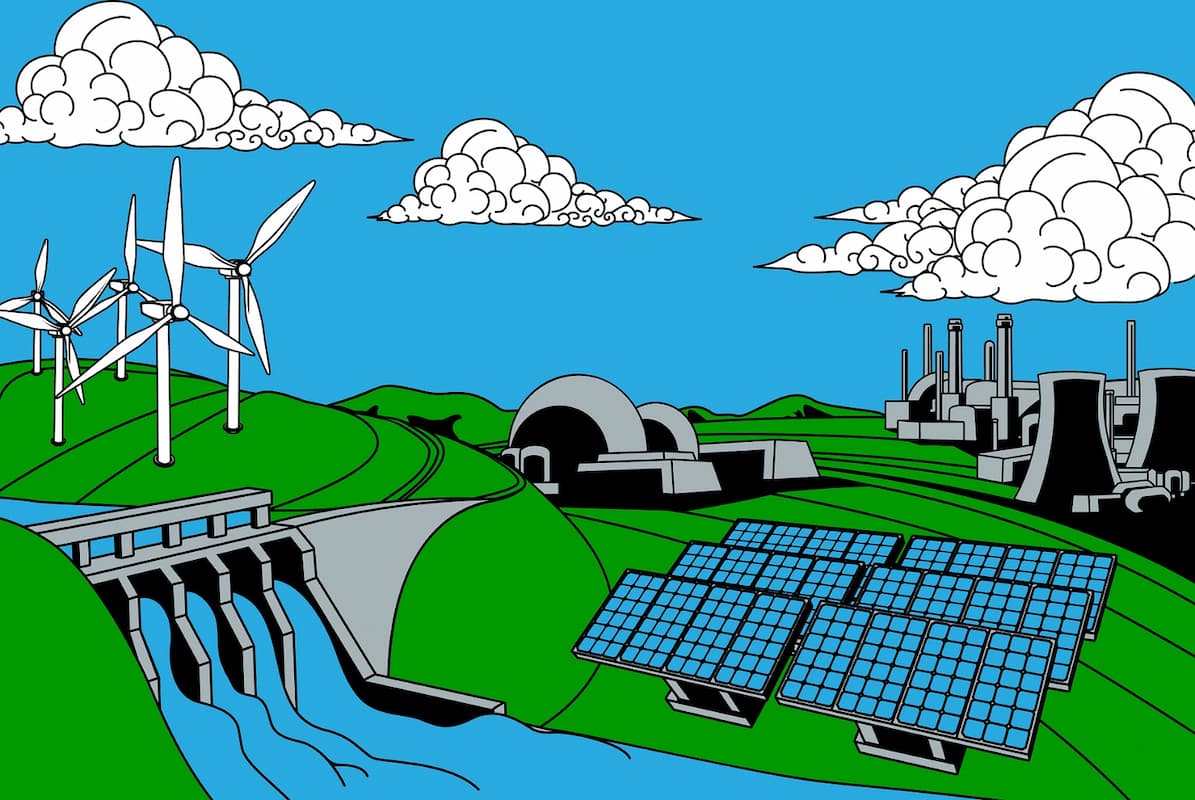
The electricity, or power generation mix, refers to the combination of fuels used to generate electricity in a geographic region. Globally, the mix is currently dominated by fossil fuels, although the increasing use of renewable energies and natural gas is changing the situation for the better.
As of 2019, 37% of global electricity production comes from low-carbon sources, i.e., hydrogen, hydro, solar and wind. The remaining two-thirds come from fossil fuels.
Hydro is the most widely used renewable energy in the mix, accounting for 16% of power generation, followed by wind (4.8%) and solar (2.2%).
In Europe, nuclear energy is the dominant source, accounting for more than 70% of power generation. Wind and solar power combined account for just over 13%, which, although small in comparison, is still considerably higher than the rest of the world.
In the United States, shale gas is the most widely-used energy source, with a share of around 25% in the country’s overall electricity mix. Shale gas is produced on a large scale in the country, which, alongside coal exports, keeps prices low on the global market.
However, renewable energy is the fastest-growing energy source in the U.S. and increased 100% from 2000 to 2018. Renewables make up 17% of U.S. electricity generation, with the bulk coming from hydro (7%) and wind (6.6%).
In China, coal still accounts for 57.7% of the country’s energy use, although large-scale nuclear power plants and onshore wind farms are being developed to create a more sustainable future.

Source: Our World in Data based on BP Statistical Review of World Energy (2020)
Several countries around the world have introduced targets to achieve net-zero emissions by 2050. As outlined in the Paris Agreement, the global energy sector needs to evolve in order to keep global temperatures below 2°C.
Over the next decade, the decisions we make about power generation will be crucial to our progress in achieving a global net-zero target.
According to the International Energy Agency (IEA), global CO2 emissions would need to reduce by around 45% by 2030 to be on track to achieve this ambitious target. Accordingly, industrial CO2 emissions would need to fall by around 20.1 Gross tonnage (Gt) by 2030.
Needless to say, there’s a lot of work to be done.
Alongside behavior change, the electrification of energy systems will be central to achieving targets and creating a sustainable future. Of course, there’s no silver bullet in this scenario and no single fuel or technology will enable the entire energy sector to reach net-zero.
What’s required is a tailored approach, based on country-specific circumstances. Low-carbon electricity, bioenergy and hydrogen-based fuels need to combine to provide more than 70% of our global energy needs. This is around the same percentage as is currently provided by fossil fuels.
Decarbonisation is the process of removing or reducing carbon dioxide (CO2) from a country's economy. Electricity supply is one of the largest emitters of carbon dioxide in the world and several paths need to be taken to reduce its impact.
According to the Intergovernmental Panel on Climate Change (IPCC) the power sector needs to be almost completely decarbonised by around 2050 in order to meet climate change targets.
Decarbonisation can be achieved by increasing the share of low-carbon energy sources, particularly renewables, and by reducing the use of fossil fuels - primarily through Carbon Capture and Storage (CCS) technology.
Worldwide, there are now 19 CCS facilities that have the potential to generate negative emissions by separating CO2 from the gasses produced in power generation.

Source: Our World in Data based on BP Statistical Review of World Energy & Ember (2020)
The electricity mix is typically spoken about in the context of decarbonisation, however, for a complete overview, we need to consider total energy consumption, which includes transport and heating as well as general usage.
In order to achieve net-zero targets, we need to consider how the electricity mix can help electrify other parts of the energy system – such as the shift to electric vehicles. The IEA predicts that by 2030, global electricity demand will increase five to eleven-fold from current levels. In order to benefit from a cleaner environment, the electricity used in electric vehicles needs to be as low-carbon as possible.
Although electric vehicles are more efficient than gas-powered vehicles, the benefits they can bring to reducing greenhouse gases depends on the mix of electricity sources used to charge them.
For example, one company in the U.S., Austin Energy, has developed a charging network called Plug in EVerywhere that enables customers to charge their vehicles using 100% wind-generated electricity.
Similarly, vehicles can be charged with on-site renewables. Google, for example, provides electric vehicle charging to its employees using solar and wind power plants.
Heating is the largest energy end‑use, accounting for around half of total consumption, providing heat for domestic and commercial properties.
Currently, fossil fuels make up 80% of conventional electric heating technologies. However, the use of electric heat pumps and renewable technologies is increasing globally. According to the IEA, in order to meet net-zero targets, the use of clean heating technologies needs to double to 50% of sales by 2030.
As one of the world's fastest-growing industries, renewable energy projects can be complex, often involving multiple companies in different countries.
At Brunel, we provide a solution that traditional energy recruitment agencies can’t. In fact, we’re the only company in the world that offers a fully-integrated "whole project" approach to renewable energy projects.
Whether it's offshore wind, innovative energy storage, solar or hydrogen, you need highly-skilled specialists in order to lead the industry. Our services range from Manpower and Payroll to Statement of Work and Vendor Inspection.
Find out more about Brunel’s services below.