Is Asia's FPSO, FLNG, and FSRU Manpower Demand Outnumbering Its Talent Pool?
27 July 2026
Conventional Energy
Conventional Energy
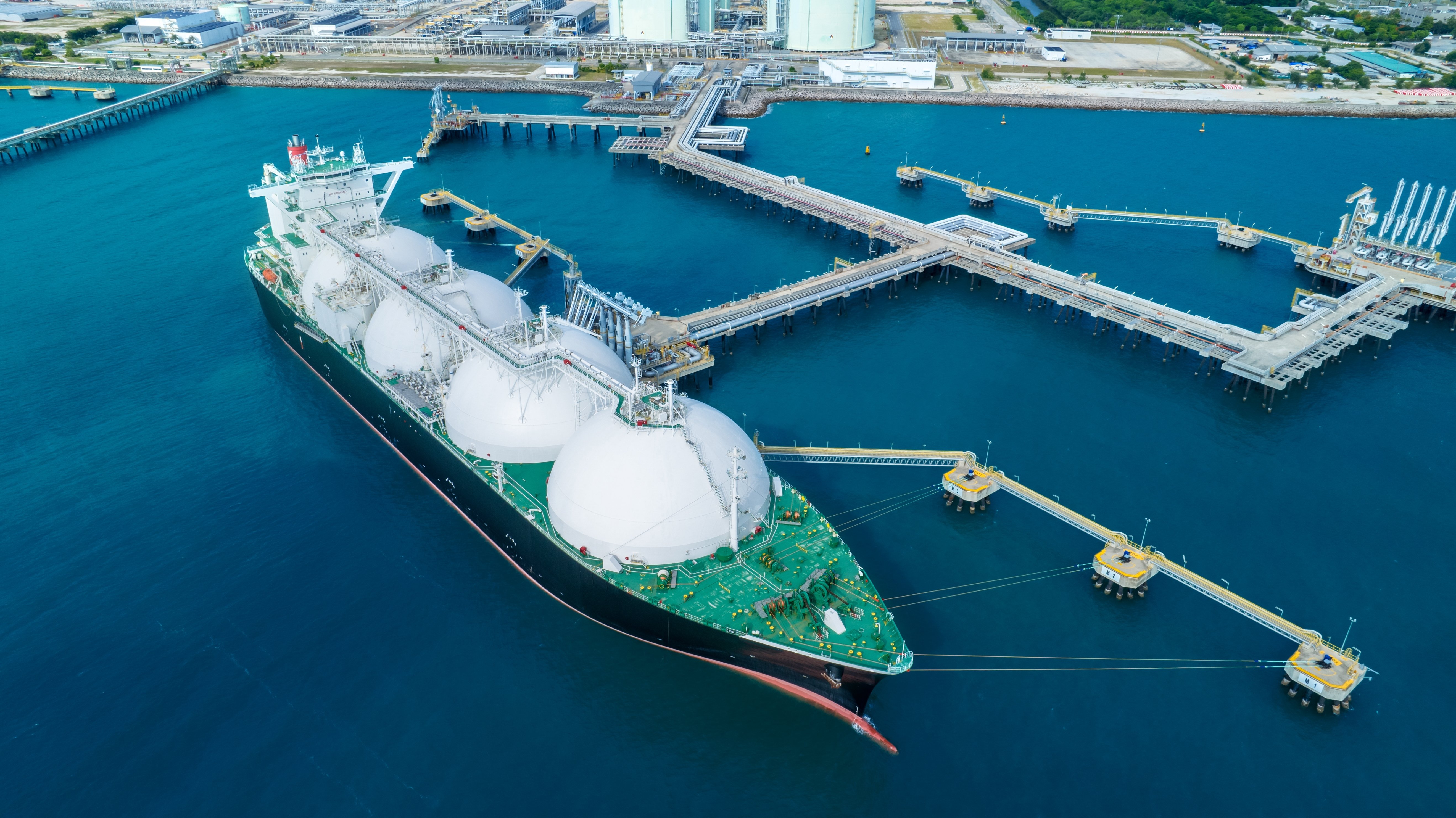
Asia's offshore energy sector is in the middle of an unprecedented build cycle.
The numbers speak for themselves. The Asia-Pacific FPSO market was valued at USD 11.30 billion in 2025 and is projected to reach USD 12.14 billion this year and reach USD 21.48 billion by 2034. The FLNG segment is growing faster, with the region expected to lead globally at a CAGR of approximately 11.5% until 2030.
Tracking the same upward trend are FSRUs. Once a niche option for fast-track import markets such as Germany, they are now the preferred solution in China, India, and Southeast Asia to meet skyrocketing natural gas demand without requiring massive infrastructure investment. The Asia-Pacific FSRU segment is projected to grow from USD 260 million in 2025 to USD 950 million by 2032, growing at a CARG of 24.2%.
Southeast Asia is entering a second wave of deepwater gas development, with projects targeting 28 trillion cubic feet of resources across Brunei, Malaysia, and Indonesia, despite more complex commercial and operating conditions.
The Asia Pacific floating assets boom is real.
But what's also real are the timelines and the pressure on limited resources. There's a growing realisation that the biggest constraint on delivery isn't capital, but the one thing the industry cannot fabricate:

To better understand the pressure that specialist recruitment and deployment are under, it's crucial to know current, short-term, and medium-term needs.
Indonesia currently has three concurrent major floating production developments. The largest is Abadi LNG in the Masela Block, expected to produce an estimated 9.5 million tonnes per annum of LNG via a gas FPSO connected to an onshore liquefaction plant. The project is in dual FEED, with two competing groups of contractors engineering the project simultaneously, each with a full team of process, subsea, and controls specialists. There are also Mubadala's Tangkulo FPSO and Eni's FPSO in Kutei.
Malaysia is running the region's most mature programme. Petronas is building its third FLNG, ZLNG (FLNG 3), a nearshore FLNG initiative under development in the Sipitang Oil & Gas Industrial Park (SOGIP), Sabah. This is on top of published requirements for four additional FPSOs and one FSO over the medium term.
In other parts of the region, the challenge is not just about new construction. Equally important is operating and maintaining floating assets in tough environmental conditions.
Cumulatively, this is a significant number of simultaneous activities. New-build FPSOs, FLNG commissioning, FSRU rollouts, and deepwater FEED work are happening on overlapping timelines, drawing from the same scarce pool of specialists.

Consolidating the publicly available timelines of the region's floating production pipeline, the overlap becomes more apparent:
These are not unrelated dates spread across unrelated project types in different countries. They're a cluster of FPSO, FLNG, and FSRU developments converging on the same timeline, needing the same type of talent and the same experience in commissioning or operating a floating facility in the oil and gas sector.
Several floaters are coming live in Malaysia including Sepat FPSO, Kikeh FPSO, and ZLNG, potentially creating a talent crunch in operations and maintenance specialists. Indonesia can face the same scenario with Abadi FPSO, Tangkulo, and Kutei. More floating assets operators are turning to Korea for new FSRU, FLNG, and FPSO builds and finding good local hires could be a challenge.
The biggest bottle neck in commissioning would be China as almost all recognized floaters will be commissioned there including Tangkulo, Sepat, GDM, and SEAP 1 and 2, just to name a few. Chinese yards continue to win a large share of global FPSO/FLNG fabrication, integration, conversion work. The volume of projects being executed in Chinese yards is creating a sustained demand for commissioning personnel. Further, commissioning teams now require more multidisciplinary expertise versus five years ago.
Take LNG, FLNG, and FPSO commissioning managers as an example. It's not unusual for mega-projects to seek candidates with 15 to 20 years of experience.
This is indicative of something crucial: many of these positions are not roles you can train someone into in a short amount of time. The qualified candidates reached this level of experience five to fifteen years ago, and there is no fast way to grow the talent pool.

What makes Asia's position even more distinctive is that the region's shipyards are not only catering to regional demand. They are also the fabrication hub for floating assets worldwide.
Singapore is the world's leading FPSO conversion and deepwater integration centre, with Seatrium's Tuas and Jurong yards delivering sophisticated FPSO, FLNG, and FPU integration work. These yards receive modules fabricated in Malaysia and Indonesia for final integration before global deployment.
South Korean yards play an equally central role. HHI's Ulsan yard spans more than 7.2 million square metres with 10 dry docks. Hanwha Ocean has delivered more than 200 LNG carriers. Samsung Heavy Industries continues to lead in FLNG construction.
This scope of work makes Asia's talent pool not just regional but global. An engineer in Batam or Singapore doesn't stay in the regional workforce. The moment they finish a project, they're a viable hire for the next FPSO going into service in Guyana or Brazil. The same is true of FSRU projects, where regasification and marine operations experience gained in Asia is just as relevant and valuable in Europe or Latin America.
This is where Brunel's global mobility expertise becomes as important as its technical recruitment capability. Moving a commissioning manager from Singapore to Guyana, or an ICSS engineer from Batam to Brazil, isn't simply a matter of flights and visas. It involves navigating local content requirements, work permit regulations, tax implications across jurisdictions, and the practical realities of relocating specialists and their families to remote or unfamiliar locations on tight project timelines. Brunel's experience managing this kind of cross-border deployment means operators and contractors can move quickly once the right specialist is identified, rather than losing weeks to logistics while a competing project closes the deal first.

Conventional FPSOs process oil. However, the upcoming major FPSO projects, such as Abadi and Tangkulo, are gas FPSOs, which require liquefaction-grade gas treatment rather than crude separation. Job descriptions for process engineering roles now cover FPSO and FLNG topside modules together, rather than as separate disciplines, as current projects increasingly require them to be. This competency sits with a smaller group of people who have worked specifically on FLNG or gas FPSO projects, and there simply haven't been that many built yet anywhere in the world.
Responsible for integrating fire and gas systems, cause and effect logic, cybersecurity, and the full safety architecture of the asset, ICSS engineering is a named, standalone discipline, not folded into instrumentation. On a unit handling liquefied gas, these engineers also have to account for cryogenic process trains and pressurised gas inventories, which don't exist on a conventional oil FPSO.
Automation engineers work alongside ICSS to ensure that control systems across topsides, marine, and offloading operations function as a unified whole rather than isolated modules. On gas FPSOs and FLNG units, where process conditions are more complex and the margin for error is narrower, the demand for automation engineers with floating assets experience is growing and the supply hasn't kept pace.
When Cyclone Remal hit Bangladesh in May 2024, Summit LNG's FSRU at Moheshkhali was badly damaged after being struck by a floating pontoon. Repairs took four months to complete. This is a clear example of why these roles matter. As other Asian countries, such as Vietnam, the Philippines, and Indonesia, bring more FSRUs online, they need specialists who can keep these assets running in difficult conditions.
Every specialist eventually hands their work to commissioning. This is the point that determines whether an oil or gas FPSO, an FLNG vessel, or an FSRU starts up on schedule or doesn't, and where design assumptions are tested under live conditions.
Commissioning engineers work across every system on the asset. This includes process, mechanical, electrical, instrumentation, and safety before handing over to the commissioning manager who owns the overall startup sequence. On gas FPSOs and FLNG units, this handover process is more complex and more consequential than on a conventional oil FPSO, which is why the demand for experienced commissioning engineers, not just managers, is growing in step with the region's project pipeline.

Process safety specialists identify and manage the risks that come with handling hydrocarbons and liquefied gas at scale. On gas FPSOs and FLNG units, where a process deviation carries far greater consequences than on a conventional oil facility, these roles are embedded across every project phase from FEED through commissioning.
Floating assets routinely move between Indonesian waters, Korean shipyards, and Singaporean integration facilities before reaching their final operating location, each with its own regulatory framework. Compliance specialists navigate flag state, class society, and host country requirements simultaneously, and on projects spanning multiple geographies, that job is rarely straightforward.
Technical safety engineers own the formal safety assessment process: hazard identification studies, quantitative risk assessments, and safety case development. On floating assets where the vessel itself is the facility, this work starts at concept stage and runs through to operations. Treating it as a late-stage checkpoint is one of the more common and costly mistakes a project can make.
Electrical, mechanical, and instrument and telecom design engineers form the backbone of any FPSO, FLNG, or FSRU project's engineering execution phase. What sets floating assets apart is that generalist design experience rarely transfers cleanly. Operators and contractors increasingly need engineers who have worked specifically on floating facilities, not just fixed platforms or onshore plants.
Combined cycle specialists bring expertise in integrating gas turbines with heat recovery systems to improve energy efficiency across the asset. As emissions reduction becomes a harder requirement rather than a design preference on newer gas FPSO and FLNG projects, this role is quietly moving from a niche specialism to a core part of the engineering team.
The projects requiring these roles are relatively new, and the stakes are high, which means experience cannot be substituted or expedited. This creates a different kind of scarcity than simple headcount insufficiency.
With or without a sufficient workforce, Asia's FPSO, FLNG, and FSRU pipeline will keep moving.
The projects that hit their schedules in the short and medium term won't necessarily be the ones with the highest capital. They'll be the ones whose commissioning managers, process engineers, ICSS leads, and operations crews were locked in well before the rest of the industry started looking for the same people.

This is where Brunel can bridge the gap, with recruitment, workforce, global mobility, and project delivery solutions. With deep experience in offshore oil and gas recruitment and workforce mobilisation, coupled with a strong Asian presence across 20 offices, Brunel leverages its global network of more than 11,000 specialists to supply the talent needed for floating assets amid a global and regional workforce crunch.
Brunel also has a proven track record of working with floating assets operators and EPCs. Notable among these is the BC-10 Project, spanning Singapore, Brazil, and the United States, for which Brunel provided a project team of more than 100 technical specialists, plus an additional 60 covering project management, project engineering, project services, construction supervision and inspection, and commissioning.
"Operators and contractors building teams across the floating assets pipeline need to face an uncomfortable truth: other companies are hiring for the same specialists, from the same shortlist, for the same time period," explains Sujatha Samarakody, Brunel's Head of Conventional Energy. "Foresight now means not only planning around project timelines, but strategically considering concurrent projects."

That's the conversation worth having now, before the next commissioning wave arrives and everyone is working from the same shortlist. A limited talent pool doesn't show up in a feasibility study or an FID presentation. By the time it does, it usually shows up as a delay no one accounted for.
The operators and contractors who overcome this hurdle won't be the ones who react fastest once the workforce gap becomes visible. They'll be the ones who treat specialist availability as a planning input from the start.
Schedule a chat with our team

1. What's driving the surge in FPSO, FLNG, and FSRU projects in Asia?
Rising LNG demand, deepwater gas discoveries, and the need for fast-track import infrastructure are driving simultaneous activity across Indonesia, Malaysia, and Vietnam.
2. Why is commissioning talent so hard to find?
Commissioning managers on these projects typically need 15 to 20 years of experience, and that level of expertise can't be built quickly to meet short-term demand.
3. Why are gas FPSOs different from conventional FPSOs?
Gas FPSOs require liquefaction-grade process engineering rather than crude oil separation, a competency only a small global pool of specialists currently holds.
4. Why do FSRU operators need specialists with hands-on field experience?
FSRUs often operate in challenging environments such as cyclone-prone waters, where unexpected damage and repairs can keep units offline for months. Operators need specialists who have actually managed these conditions, not just those trained on standard regasification procedures.
5. Why does a talent shortage in Asia matter globally?
Asia's shipyards fabricate floating assets for projects worldwide, so its specialist workforce isn't just regional, a shortage here can delay projects elsewhere too.